
Gloucester County Court Records After Arrest
Gloucester County court records after a jail arrest do not start and end with the booking entry. The county's custody path begins with the arresting agency, then runs through Gloucester County Corrections transport duties and admission into Salem County Correctional Facility. Gloucester's Classification Unit says all Gloucester County arrestees are transported and admitted into Salem County Jail, then processed, classified, seen by a judge, and legally discharged or held as the case requires.
That custody record is different from the court record. Jail paperwork may show arrest or complaint charges, but the Gloucester County Prosecutor's Office reviews indictable matters, and New Jersey Courts maintains the case record. Prosecutor review can change the charge list through an accusation, indictment, plea, amendment, downgrade, dismissal, or detention motion. For the booking side, use Gloucester County jail inmate records. For booking photos, use Gloucester County jail mugshots. Court records after an arrest should be checked through NJ Courts and, when needed, the proper records request route.
The Gloucester Classification Unit page is the best official source for the custody bridge from arrest to court. It explains the Salem admission path and the local role in video court, housing, legal incarceration, and discharge.
The Gloucester County Classification Unit page shows why a court search may not match a jail search at the same moment.
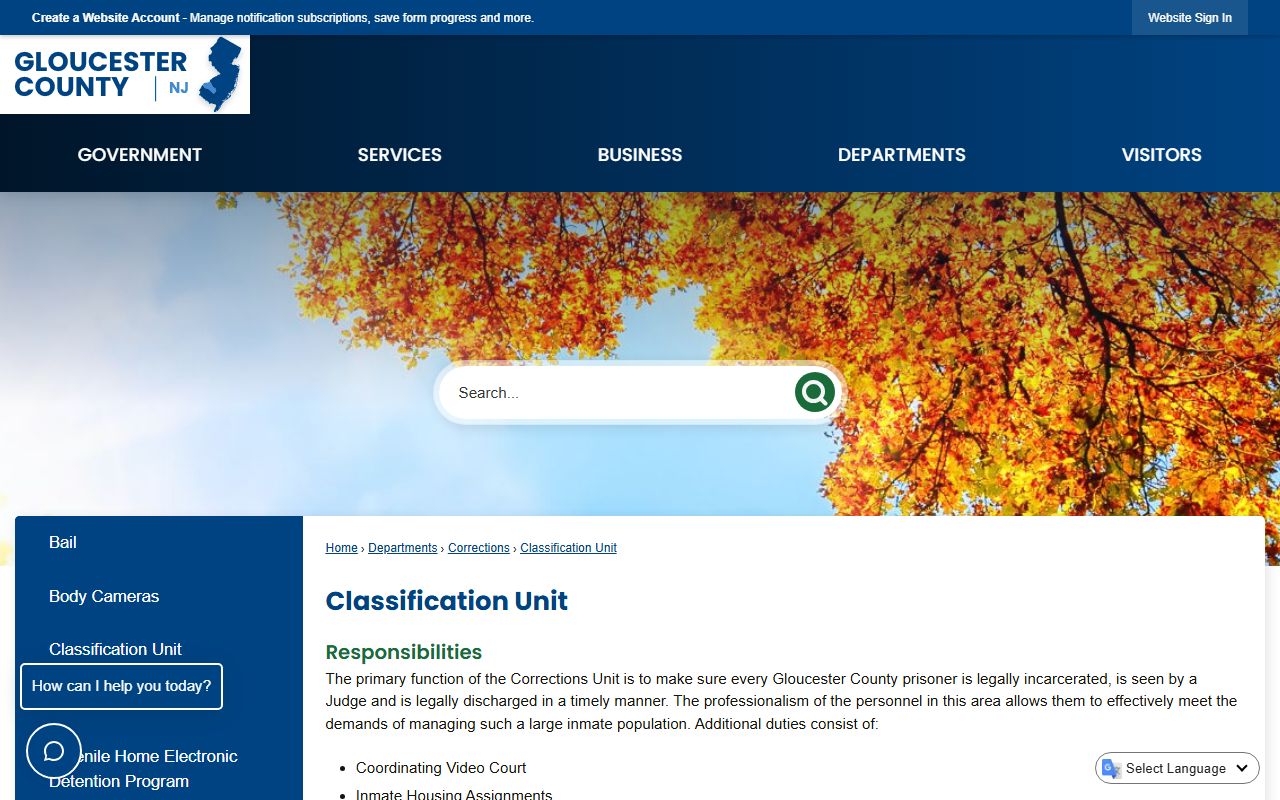
The classification source supports the arrest to Salem intake to first appearance sequence used throughout Gloucester County court records after jail arrest searches.
Find Gloucester County Court Records After Arrest
The main public case-search route for indictable Gloucester County criminal cases is NJ Courts PROMIS/Gavel Public Access. NJ Courts describes PROMIS/Gavel as case information for indictable criminal cases from arrest through appellate review. Search by name when no case number is known, or use an indictment, accusation, complaint, or municipal number when one appears on paperwork.
- Confirm the person's full legal name, date of birth, arrest date, and arresting agency if known.
- Check current custody first through Salem, Atlantic, Essex, or VINE when release status matters.
- Search PROMIS/Gavel by defendant name or by indictment, accusation, complaint, or municipal number.
- Open the matching case and compare each court charge with the jail or complaint charge language.
- Use NJ Courts records request form CN 10200 for older, missing, or nonpublic copies that must be requested.
NJ Courts Find a Case is the central starting point when a Gloucester court record belongs to the Judiciary rather than Gloucester County OPRA. The county's OPRA guidance also warns that court-related records, criminal charges, outstanding warrants, and associated arrest records may be available from Superior Court or federal court where the matter was heard.
| Field Label | Type | Required | Format Notes |
|---|---|---|---|
| Last Name | Text | Required for name search | Use the defendant's exact legal spelling when possible. |
| First Name | Text | Optional, recommended | Add a first name to narrow common Gloucester County names. |
| M. | Text | Optional | Middle initial helps separate similar defendant records. |
| Indictment / Accusation / Complaint / Municipal Number | Text | Required for identifier search | Use a known charging or case number instead of a name search. |
| Search | Button | Yes | Run one search type at a time. |
The PROMIS/Gavel Public Access screen is the official search menu for many criminal case lookups after a Gloucester County arrest.
The search fields matter because a court record may be easiest to find by case number after the complaint, accusation, or indictment is known.
Arrest to Gloucester County Court Records
The local path is arrest, transport, Salem intake, classification, first appearance, prosecutor review, then court case tracking. A new arrest may not appear in a public system right away. Gloucester County Corrections handles secure transport, and the Classification Unit makes sure each Gloucester prisoner is legally incarcerated, seen by a judge, and discharged or held in a lawful way.
The first appearance is the court point where rights, charges, release conditions, and detention issues may be addressed. The prosecutor's filing decision then shapes the court record. If the person is held, the housing facility may still be Salem. If classification or a regional bed decision moves the person, the practical custody question may belong to Atlantic or Essex while the court record remains in the Gloucester case system.
- Classification
- Corrections review of custody, housing, court status, credits, transport, and discharge issues.
- First appearance
- The early court review after arrest where charges and release conditions may be addressed.
- Detainer
- A hold or request from another agency that can keep a person in custody after a local case event.
- Accusation
- A New Jersey charging document sometimes used when indictment is waived.
Note: A Gloucester County jail arrest can create several records, but only the Judiciary record shows the court case status.
Charging Documents After Gloucester Arrest
Court records after a jail arrest often turn on the charging document. A complaint can appear early. An accusation or indictment may follow in Superior Court. The names matter because a jail charge can be preliminary, while a court charging document tells the case system what is being prosecuted at that stage.
| Document | Who Uses It | What It Means |
|---|---|---|
| Complaint | Police, court, or prosecutor process | Early charge document tied to the arrest or complaint-warrant path. |
| Accusation | Prosecutor | Superior Court charging document used in some cases, often when indictment is waived. |
| Indictment | Grand jury | Formal charging document for indictable matters after grand-jury action. |
The Gloucester County Prosecutor's Office is separate from the jail and sheriff functions. Jail staff manage custody, transport, classification, and video court logistics. The Prosecutor's Office makes prosecution decisions for indictable criminal matters, while NJ Courts maintains the docket, case events, and record copies.
Gloucester Charge Status Records
A charge status is not the same as a booking label. Charges can be filed, amended, reduced, dismissed, or resolved by plea or trial. Gloucester court records after an arrest should be read charge by charge, because one count can be dismissed while another remains pending or ends in a conviction.
| Status | What It Means | Why It Matters |
|---|---|---|
| Pending | The charge is open and has not reached final disposition. | Custody, release conditions, and court dates may still change. |
| Amended or reduced | The charge language, degree, or count changed after review. | The court record may differ from the jail intake charge. |
| Dismissed | The court or prosecutor ended that count without a conviction. | Other counts may still remain active. |
| Convicted | The charge ended in a guilty plea, verdict, or other conviction entry. | Sentencing and possible NJDOC transfer may follow. |
| Warrant or failure to appear | A court order may be active because a person missed or violated a court requirement. | A new arrest or hold may result. |
Bail and Court Release Records
Gloucester County's bail rule is specific. The county bail page says bail for Gloucester County inmates is accepted at the facility where the inmate is housed, and not at Gloucester County Corrections in Woodbury. That means the court record may show a release condition, but the payment or facility process depends on current housing.
If a Gloucester arrestee is at Salem, start with Salem. If the person moved after classification, Atlantic or Essex may have the practical instructions for bail, funds, visiting, or release. New Jersey pretrial release is not a simple cash schedule in most cases. A detention order, complaint-warrant, parole hold, probation hold, detainer, immigration hold, or another court order can prevent release even when one case appears to have a payment option.
| Type or Status | Gloucester Handling |
|---|---|
| Facility-accepted bail/payment | Handled at the current housing facility, not Gloucester Corrections in Woodbury. |
| Court-ordered pretrial release | Confirm through NJ Courts or the Criminal Division because conditions may be non-money terms. |
| No-bail or held status | May come from detention, warrant, detainer, parole, probation, or another agency hold. |
| Funds applied to fines or bail | Atlantic notes inmate funds may be used for penalties, fines, or bails, but current procedure must be confirmed. |
| Scam risk | Essex warns that legitimate release information should be confirmed directly with the facility. |
The Gloucester County bail notice is a useful check before relying on a court record alone for release steps.
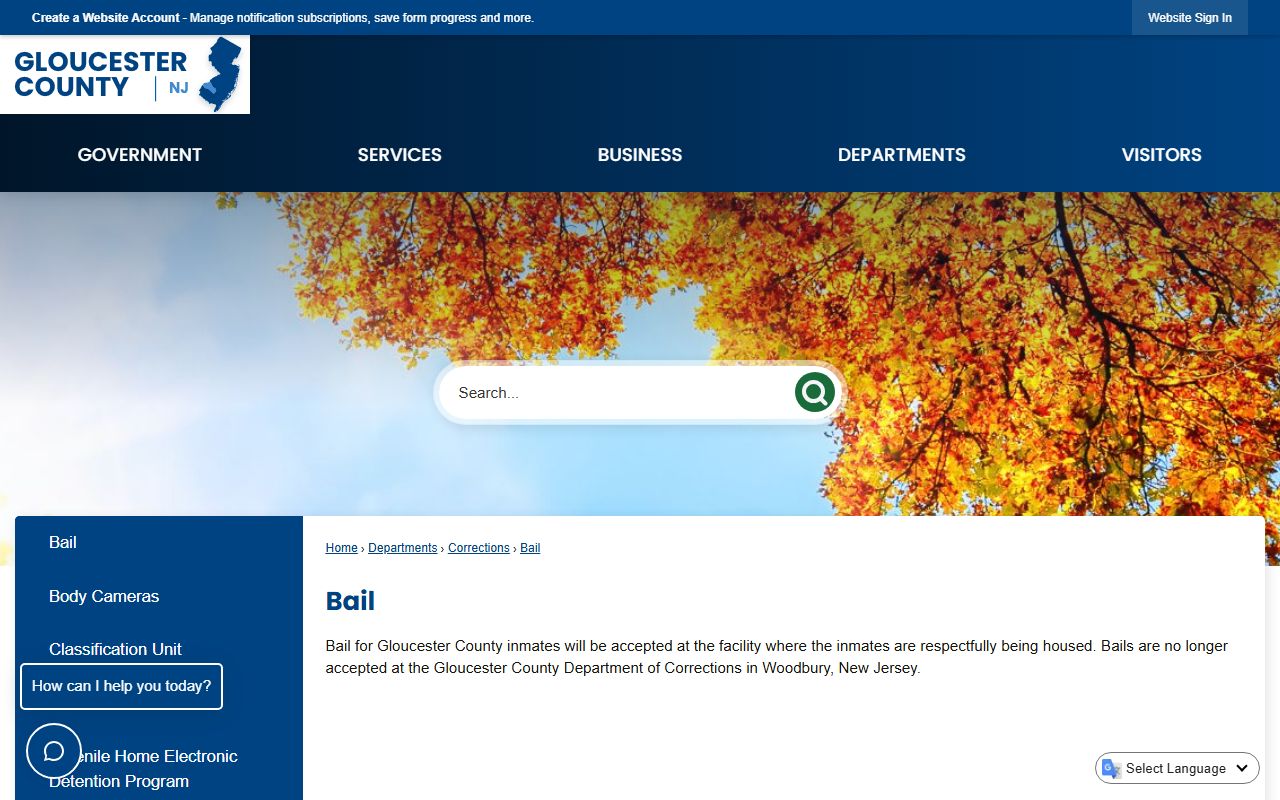
The notice reinforces the need to match court release terms with the current jail or regional facility holding the person.
Gloucester Warrants and Arrest Records
A warrant can be the reason a Gloucester County jail arrest occurs. The Sheriff's Warrant Division locates and apprehends people with outstanding arrest warrants, returns them to the court's jurisdiction, and maintains more than 7,300 warrant files. The listed warrant types include failure to appear for Superior Court, violation of probation, domestic violence, civil contempt, child support, fugitive from justice, juvenile probation, state parole, and military desertion warrants.
Gloucester also publishes an official Most Wanted list. It is a curated public safety list, not a full searchable warrant database. Court-related warrant records may belong to Superior Court, while sheriff administrative records may be handled through county OPRA unless an exemption applies.
Charges, Convictions, Sealed Records
Public readers often treat an arrest, a charge, and a conviction as the same thing. They are not. A Gloucester County arrest can lead to a jail record and a court case, but the court record must still show what happened to each charge. The same caution applies to sealed and expunged records. New Jersey expungement is the official route for eligible arrest, detention, court, and correctional records.
| Point Compared | Charge | Conviction |
|---|---|---|
| Meaning | An accusation filed or carried in the case. | A guilty plea, verdict, or other final conviction entry. |
| Proof level | May rest on probable cause or charging review. | Requires plea, verdict, or legally accepted disposition. |
| Record effect | May be pending, changed, dismissed, or resolved. | Can affect sentencing, custody, and later record searches. |
| Point Compared | Sealed | Expunged |
|---|---|---|
| Public access | Restricted from ordinary public view. | Treated under New Jersey expungement rules as removed from regular public access. |
| Official route | Usually tied to court limits or protected record status. | Use NJ Courts expungement guidance for eligible records. |
| Scope | May protect a case, filing, juvenile matter, or sensitive detail. | May reach arrest, detention, court, and correctional records if an order applies. |
Gloucester Court Record Access Limits
New Jersey OPRA, N.J.S.A. 47:1A-1 et seq., favors access to government records unless an exception applies. That does not mean all arrest and court material is released by the same office. OPRA definitions exclude some criminal investigatory records, and N.J.A.C. 10A:31-6.10 treats certain correctional records as confidential, including specified security, phone, email, visit, logbook, and surveillance records.
Use the office that holds the record. Criminal court charges and case dispositions go through NJ Courts record-copy channels. Prosecutor-held records go through the Gloucester County Prosecutor's Office OPRA route. Sheriff and corrections transport or classification records may go through Gloucester County OPRA. Juvenile records, sealed records, expunged records, active investigative files, and security-sensitive jail records may be restricted.
Important: Court records after arrest are not consumer reports and should not be used for FCRA-covered screening decisions.